
How Blocked Drains Birmingham AL Damage Your Home And What It Costs

Quick answer: Blocked drains Birmingham AL homeowners deal with most often stem from red clay soil pushing tree roots into pipe joints, mineral scale from the region’s moderately hard water, and aging cast iron lines in older Jefferson County neighborhoods. Left alone, a clog can back up sinks, flood a crawl space, and even shut down an AC system through a clogged condensate line. Catching the signs early keeps repair costs in the hundreds rather than the thousands.
If you’ve spent a summer in Birmingham, you already know the drill: thick humidity, sudden downpours, and clay soil that swells and shrinks with every weather swing. That same soil is constantly pressing against the pipes buried under your yard, and it’s one of the biggest reasons blocked drains birmingham al calls spike every spring and fall. On recent service calls across Jefferson County, our certified technicians have walked into kitchens with standing water, bathrooms that smell faintly of sewage, and more than one AC unit that quit working because a drain line clogged somewhere nobody thought to check.
This guide walks through why Birmingham homes clog more than homes in other parts of the country, what those clogs typically cost to fix, and how drain problems connect to the HVAC system sitting in your attic or beside your house. We’ll also cover when a DIY fix is enough, when it’s time to call a licensed plumber, and how to keep both your pipes and your air conditioner running smoothly through another Alabama summer.
Key Takeaways
- Red clay soil and root intrusion account for a large share of main line blockages in neighborhoods built before the 1980s, especially around older bungalows near the I-65 and I-59 corridors.
- The average cost of blocked drains Birmingham AL repairs ranges from under $150 for a simple snaking job to several thousand dollars for trenchless pipe lining on a damaged lateral.
- A clogged AC condensate drain line can trip a home’s float switch and shut the whole cooling system down, which means plumbing problems and HVAC problems in Birmingham are often more connected than homeowners realize.
Why Birmingham Homes Are Especially Prone to Drain Clogs
Birmingham’s geography and building history work against homeowners in a few specific ways, and understanding them helps explain why residential blocked drains Birmingham AL cases look different than clogs in, say, Phoenix or Minneapolis.
Red Clay Soils and Root Intrusion
The red clay that defines so much of Jefferson County isn’t just a nuisance for gardeners. It expands when wet and contracts when dry, and that constant movement puts pressure on buried sewer laterals, nudging pipe joints apart just enough for tree roots to find their way in. Mature oaks and water oaks, common throughout older Birmingham neighborhoods, send roots toward any available moisture, and a hairline gap in a clay or cast iron pipe is exactly the kind of moisture source roots seek out. Once roots get a foothold, they thicken over time and eventually form a dense mat that stops wastewater cold.
Limestone Geology and Mineral Scale
Much of the Birmingham region sits on limestone bedrock, and the municipal water supply, drawn largely from the Cahaba River, carries moderate hardness. Over years of use, dissolved minerals build up along the interior walls of pipes, narrowing the usable diameter and giving grease, soap, and debris something to stick to. This scale buildup is a quieter contributor to clogs than root intrusion, but it’s a factor our technicians check for during nearly every main line camera inspection.
Aging Cast Iron and Clay Pipes
Jefferson County’s older neighborhoods, think sections of Homewood, Avondale, and parts of central Birmingham, were plumbed with cast iron or vitrified clay pipe decades before PVC became standard. Cast iron corrodes from the inside out, developing rough scale that snags debris, while clay pipe sections are prone to shifting at the joints. Homeowners in these areas report blocked drains Birmingham AL issues at a noticeably higher rate than those in newer subdivisions built with modern PVC lines.
Humid Subtropical Climate and Storm Runoff
Birmingham’s humid subtropical climate brings heavy, fast-moving storms, particularly in spring. Saturated ground and sudden runoff can overwhelm older sewer laterals, and a line already narrowed by roots or scale has far less capacity to handle that extra volume. It’s a pattern we see repeatedly: a property manages fine for months, then a hard rain pushes a partial clog into a full backup.
Common Causes of Residential Blocked Drains Birmingham AL
Different parts of the house clog for different reasons, and the warning signs vary just as much. The table below breaks down what we see most often on service calls.
| Drain Location | Primary Cause | Warning Sign |
|---|---|---|
| Kitchen sink | Grease, food scraps, coffee grounds | Slow draining, gurgling, foul odor near the sink |
| Bathroom sink and tub | Hair, soap scum | Standing water, slow drain, musty smell |
| Main sewer line | Tree roots, shifted clay joints, debris | Multiple drains backing up at once, gurgling toilets |
| Floor drains (basement, garage) | Sediment, dirt, debris washed in by rain | Water pooling around the drain, slow or no drainage |
Kitchen drains are usually the first to show trouble. Grease solidifies as it cools, coffee grounds compact into a sludge, and food scraps catch on existing buildup. Bathroom drains clog from hair and soap scum, which combine into a sticky mass that’s surprisingly hard to flush with water alone. The main sewer line is where the bigger, more expensive problems live: tree roots, settled clay sections, and general debris accumulation over decades. Floor drains, especially in basements and garages common in Shelby County and St. Clair County homes, collect sediment and storm debris that can block the drain entirely during heavy rain.
Warning Signs You Have a Clogged Drain in Your Birmingham Home
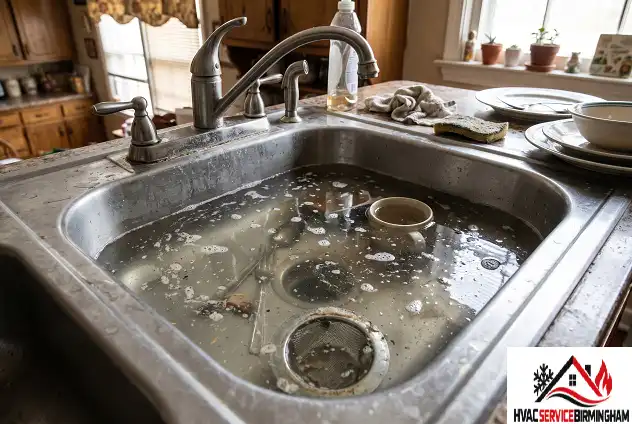
Catching a clog early is almost always cheaper than waiting for a full backup. Watch for:
- Water draining slower than usual in sinks, tubs, or showers
- Gurgling sounds coming from drains or toilets
- A sewage-like odor near floor drains or outdoor cleanouts
- Multiple fixtures backing up at the same time (a strong sign of a main line issue)
- Water pooling in the yard near the sewer lateral, especially after rain
- An AC unit that won’t turn on, which can actually trace back to a clogged condensate drain rather than the plumbing system at all
Blocked Drains Birmingham AL Cost: What Homeowners Actually Pay
One of the most common questions we hear on service calls is simply: what’s this going to cost? The answer depends heavily on what’s actually causing the clog, but here’s a realistic breakdown of blocked drains Birmingham AL cost ranges based on service type.
| Service Type | Typical Cost Range | Notes |
|---|---|---|
| Branch line snaking | $100 to $275 | Covers a single clogged fixture line, like a kitchen or bathroom drain |
| Main line cleaning | $225 to $500 | Addresses blockages in the primary sewer lateral |
| Hydro jetting | $350 to $900 | Clears heavy grease buildup, scale, or root intrusion more thoroughly than snaking |
| Camera inspection | $150 to $400 | Confirms the exact cause and location of a stubborn clog |
| Emergency or after-hours service | Add $75 to $200 | Applies to nights, weekends, or holiday calls |
These figures reflect general market ranges for the Birmingham, AL region, and your actual quote will depend on how severe the blockage is, how accessible the cleanout is, and whether the issue turns out to be a simple clog or a sign of deeper pipe damage.
DIY vs. Professional Drain Cleaning: When Each Makes Sense
Not every clog needs a professional. But knowing where that line sits matters, especially in a city where older pipe materials make aggressive DIY fixes riskier than they might seem.
| Situation | DIY Appropriate? | Why |
|---|---|---|
| Slow-draining sink with visible hair or soap buildup | Yes | A plunger or a drain snake tool usually clears surface-level clogs |
| Recurring clog in the same drain | No | Points to a deeper issue, like a partial pipe blockage, that needs inspection |
| Multiple drains backing up at once | No | Likely a main line issue requiring professional equipment |
| Standing water in a floor drain after rain | No | Could indicate a main line or municipal connection problem |
| Slow kitchen drain after a big cooking day | Yes (try first) | Often just grease buildup a plunger or hot water flush can clear |
A plunger, a basic drain snake, or a mesh drain screen is genuinely enough for minor, isolated clogs. It’s time to call a licensed plumber when a clog returns repeatedly, when more than one fixture is affected, or when you notice sewage odors outdoors. We’d also caution against relying on store-bought chemical drain cleaners in Birmingham’s older homes. Those products generate heat as they break down clogs, and in corroded cast iron or aging clay pipe, that heat can accelerate pipe failure rather than solve the underlying problem.
Professional Drain Cleaning Methods Used in Birmingham, AL
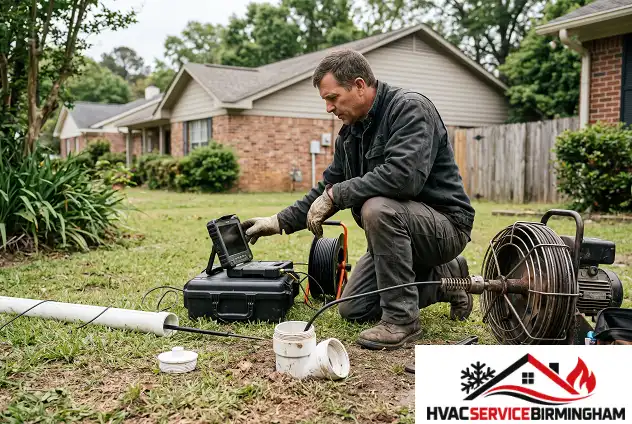
When a clog goes beyond what a plunger can handle, professionals typically use one of a few proven methods, each suited to a different kind of blockage.
Drain snaking (augering) uses a flexible cable with a cutting or grabbing head to physically break apart or pull out the clog. It’s the go-to first step for most branch line and even many main line blockages.
Hydro jetting blasts pressurized water through the pipe, scouring the interior walls clean of grease, scale, and smaller root intrusions. It’s more thorough than snaking and often recommended for recurring clogs or pipes with heavy mineral buildup from the area’s hard water.
Video camera inspection sends a small waterproof camera through the line to show exactly where a clog sits and what’s causing it, whether that’s roots, a collapsed section, or simple debris. This step prevents guesswork and helps determine whether cleaning alone will solve the problem or whether the pipe itself needs attention.
Trenchless pipe lining repairs a damaged lateral from the inside, without digging up the yard, by inserting a resin-coated liner that cures into a new pipe wall. For homes with cracked or root-damaged clay sewer lines, particularly in Birmingham’s older neighborhoods, this method avoids tearing up landscaping while restoring full flow.
How HVAC Systems Connect to Drain Problems in Birmingham Homes
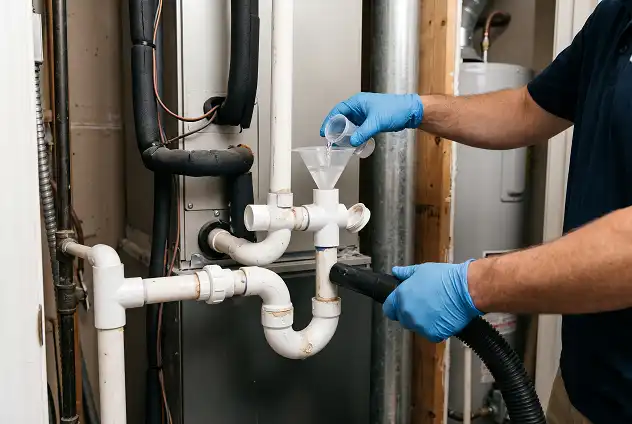
Here’s something a lot of homeowners don’t expect: plumbing clogs and air conditioning failures are more closely related than they seem. Every central AC system produces condensation as it pulls humidity out of the air, and that water has to go somewhere. It drains through a small condensate line, often PVC, that runs to a floor drain, outside, or a condensate pump.
When that condensate drain line clogs with algae, dust, or debris, water backs up into the drain pan. Most modern systems include a float switch specifically to catch this: once water rises too high, the switch trips and shuts the AC off entirely to prevent overflow damage. That’s often the real story behind a homeowner calling in confused about why their AC isn’t turning on during the hottest week of July. It’s not always an electrical fault or a refrigerant issue. Sometimes it’s a drain clog masquerading as an HVAC breakdown.
Birmingham’s humid subtropical climate makes this especially relevant. Longer, more humid cooling seasons mean AC units run more hours per year here than in drier climates, producing more condensate and more opportunities for that drain line to clog. A blocked condensate line doesn’t just shut down cooling. Left unaddressed, standing water can promote mold growth and degrade indoor air quality, which matters even more in a region where summer humidity already pushes people to keep windows closed for months at a time.
Drain Maintenance Checklist for Birmingham, AL Homeowners
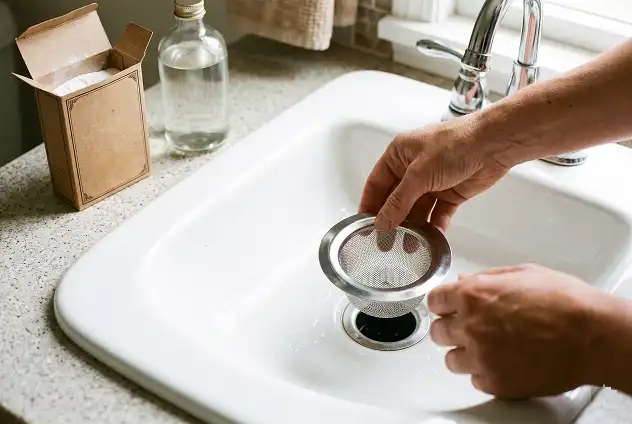
A little routine maintenance goes a long way toward preventing both plumbing clogs and HVAC drain issues.
- Run hot water through kitchen drains after cooking to keep grease from solidifying
- Use a mesh screen on bathroom drains to catch hair before it builds up
- Avoid pouring coffee grounds, grease, or food scraps down any drain
- Schedule a main line camera inspection every two to three years, especially in homes built before 1990
- Flush the AC condensate line with a cup of distilled vinegar every few months during cooling season
- Trim tree roots near known sewer lateral paths, particularly for mature oaks
- Clear gutters and downspouts before Alabama’s spring storm season to reduce runoff pressure on floor drains
- Have your HVAC system’s drain pan and condensate line checked during seasonal HVAC maintenance and tune-ups
Seasonal tip: Spring and early summer are peak times for both root intrusion symptoms and AC condensate issues in Birmingham, since warm, wet weather accelerates root growth underground and pushes cooling systems into heavier daily use at the same time.
Repair vs. Replace: When Drain Line Damage Goes Beyond Cleaning
Sometimes cleaning the line isn’t enough, and the pipe itself needs attention. Here’s how to think through that decision.
| Symptom | Likely Fix | Estimated Cost |
|---|---|---|
| Occasional slow drain, clears with snaking | Routine cleaning | $100 to $275 |
| Recurring clog in the same spot every few months | Hydro jetting plus camera inspection | $500 to $1,300 |
| Camera shows root intrusion at a single joint | Spot repair or localized pipe replacement | $1,500 to $4,000 |
| Camera shows widespread cracking or collapsed sections | Trenchless pipe lining or full lateral replacement | $4,000 to $15,000+ |
| Sewage backup affecting multiple fixtures regularly | Full main line evaluation and likely replacement | Varies widely by length and access |
The general rule: if a camera inspection confirms isolated, minor root intrusion or a single compromised joint, a targeted repair usually solves the problem. Once a line shows multiple failure points or significant structural damage, replacement typically saves money over repeated service calls down the road.
Service Areas Covered Across the Birmingham Region
Residential blocked drains Birmingham AL issues show up across the whole metro, not just inside the city limits. We regularly field calls from homeowners throughout Jefferson County, including Birmingham proper, Trussville, Gardendale, and Fultondale, where older housing stock and mature tree canopies drive a lot of the root intrusion cases described earlier.
In Shelby County, towns like Pelham and Alabaster see a mix of newer PVC-plumbed subdivisions and older properties, meaning both scale buildup and root intrusion show up depending on the neighborhood’s age. St. Clair County communities, including Pell City and Moody, deal with similar patterns, often compounded by rural lot sizes where sewer laterals run longer distances underground.
For a full breakdown of coverage by county and town, visit our list of service areas across the Birmingham region.
What You Need to Know
Does Birmingham’s red clay soil really make drain clogs worse?
Yes. The clay’s expansion and contraction with moisture puts ongoing stress on buried pipe joints, creating small gaps that tree roots can exploit. This is one of the most common root causes behind blocked drains Birmingham AL service calls in older neighborhoods.
How often should a Birmingham homeowner get their main line inspected?
For homes built before 1990, or any property with large mature trees near the sewer lateral, a camera inspection every two to three years helps catch root intrusion or scale buildup before it causes a full backup.
Can hard water from the Cahaba River supply actually clog my pipes?
Over many years, yes. The region’s moderately hard water deposits mineral scale along pipe interiors, narrowing the diameter and giving grease and debris more surface area to stick to.
Why does my AC shut off right after my drains back up?
These two problems aren’t usually related to each other, but they’re often mistaken for one another. A clogged AC condensate line trips the system’s float switch and shuts off cooling, while a plumbing drain clog is a separate issue in the sewer line. If both happen at once, it’s often coincidental timing tied to heavy humidity or storm activity straining both systems simultaneously.
Are older homes near Trussville or Homewood more prone to drain problems?
Generally yes, since many of these neighborhoods were originally plumbed with cast iron or clay pipe, both of which are more prone to corrosion, scale, and joint separation than modern PVC.
What should I do if heavy rain causes my floor drain to back up?
Avoid running additional water down other drains until the issue clears, and check whether storm debris or sediment near the drain opening is contributing. If backups happen repeatedly after rain, it’s worth having the main line inspected rather than treating each storm as an isolated event.
According to the U.S. Environmental Protection Agency, the average household’s indoor water use totals nearly 300 gallons per day, a volume that puts real, constant strain on residential drain lines, making routine maintenance more than just a convenience in older housing stock like much of Birmingham’s.
Keep Your Drains and Your HVAC System Running Smoothly
Blocked drains Birmingham AL homeowners face rarely stay small problems for long, especially with red clay soil, older pipe materials, and a climate that keeps AC systems running hard for months at a time. Whether it’s a slow kitchen sink, a gurgling toilet, or an air conditioner that won’t turn on because of a clogged condensate line, catching the signs early keeps repair costs manageable and protects the rest of your home’s systems from cascading damage.
If your drains are backing up, your AC quit unexpectedly, or you’re simply due for a seasonal check, explore our full range of residential HVAC and drain-related services to find the right next step for your home.
Need help with heating or cooling in Birmingham or nearby?
CALL NOW